Melody R. Waller
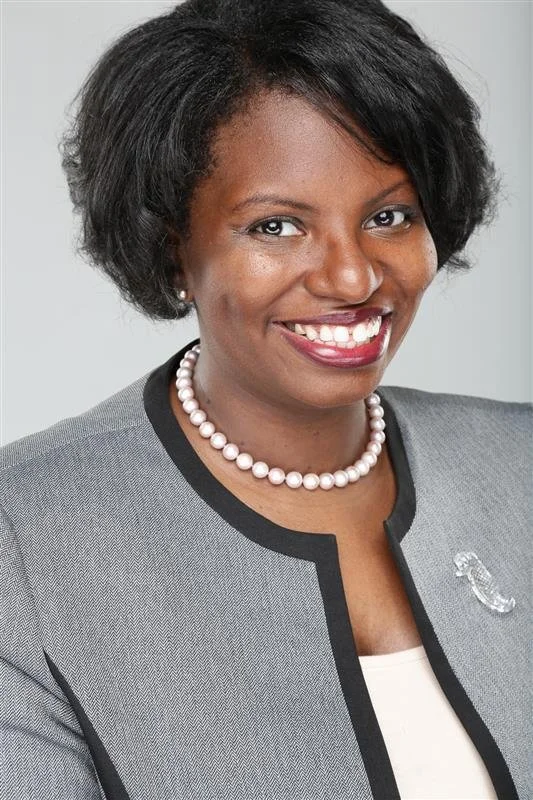
What does it take to close a pay gap? According to Melody R. Waller, it starts with simplest thing anyone could think of. A conversation. More specifically, a conversation about salaries, ranges, and being paid what we deserve. For Melody, these conversations are the center of her work with the Equal Pay Chicago Coalition (EPCC), where she serves on the Steering Committee and helps with spearheading the coalition’s various events and activities.
But her work with EPCC isn’t just a one off. Melody has built an entire career around empowering others. With a background spanning marketing communications, healthcare communications, and public health, she has spent years helping people navigate healthcare systems and teaching them how to advocate for themselves. So, whether that means helping people understand their medications, to negotiating their salaries, Melody ensures that people understand their worth and their value.
In her role as Community Engagement Specialist for Advocate Health, she works hard to close healthcare disparities that have historically created a 30-year life expectancy gap between Chicago’s north and south sides. And through her leadership with the National Coalition of 100 Black Women, Chicago Metropolitan Chapter, she brings that same commitment to economic empowerment. Here, Melody Waller shares how a Payday candy bar introduced her to equal pay advocacy, why rehearsing salary negotiations matters, and what it means to be present for one another in a world that often feels too heavy to bear alone.
When did you join the Equal Pay Chicago Coalition (EPCC)?
I was introduced to EPCC by my sorority sister, Rachel Washington, who was the representative for the Imani Pearls Community Development Foundation, which is the nonprofit arm of Alpha Kappa Alpha Sorority, Incorporated, Chi Omega Omega Chapter. We had a pillar called Economic Development that examined what it looked like to have conversations surrounding equal pay and negotiations. It wasn’t anywhere near like the conversations we’re presently having, but we knew it was something different.
The first time our chapter was involved with EPCC, there was a rally held at Daley Plaza, and we were asked to volunteer and hand out Payday candy bars. I thought it was an amazing way to bring awareness to such a serious topic.
In addition to being a part of Imani Pearls Community Development Foundation, I am also a member of the National Coalition of 100 Black Women, the Chicago Metropolitan Chapter (NCBW). NCBW has an Economic Empowerment pillar. So, when I joined, and told them about EPCC, and they were all in. At one point, I was representing both organizations at EPCC, but now it’s just NCBW. And it’s been wonderful.
What has been your role since joining EPCC and can you share some of the highlights?
Various economic disparities for women are highlighted throughout the year, and every October is the culmination of them all, along with Latina Equal Pay Day. That’s when the annual event takes place. For the past four years, I have been on the planning committee for it and have spearheaded different activities. Now, I’m on the advisory committee and I truly enjoy working with our different partners to continue bringing awareness to the pay disparities. And because there are so many people who just don't know that women are not being paid equally, there's a conversation to be had. That's what this work has been about. Not just about equality, but equity.
I specifically remember the work that we did around the shecession during the pandemic. Many of the essential workers were women who weren't being paid equitably, even though they still had to go into work full-time. And so, through NCBW, I have been able to bring awareness about equal pay.
For two years, we created videos about Black Women’s Equal Pay Day and shared them on ours, as well as EPCC’s website. And it’s been great being so intricately involved in spreading awareness about pay disparities.
I also want to make sure I highlight the work of our other partners. I really enjoy being on calls with them because everyone brings such richness and such joy to such a heavy topic. Because once you get behind in your salary, it’s hard to catch up. We don’t have the muscle memory of conversations about salary negotiation. We don’t know what we should be asking. Or how often should we be asking. Because we’re not hearing our own voice asking for what we deserve.
The research is there. The data is there. But we also have to feel empowered and empower one another to ask for what we deserve.
What are some ways we can empower one another to ask what we deserve?
A great question. I think we can share salaries. Pay transparency is so important. I once worked with a gentleman who, very surprisingly, told me how much he was making. And told me that I should ask for nothing less than that. And I had goosebumps because no one had ever done that for me.
Conversations about money are always so taboo and you're always wondering what you should ask. We don't talk about money. And so, if you don't know how much you should ask for, you don't know what you're leaving on the table. You don't know what the range is for the job. You don’t know what the budget is for the job.
Having conversations like that are important because it’s us supporting one another, calling each other. If someone says they are interviewing for a job, rehearse with them. Have a 10-minute conversation where you can actually hear yourself asking what the budget is for the job. What’s the range. For example, if the range is between $90,000 and $150,000, that’s a big gap. So, ask what does a $90,000 salary do and then ask what does a $150,000 salary do. I think that supporting each other through conversations like that and being transparent with one another are very helpful.
Also, if your last salary was $90,000, then your next salary can't also be $90,000. You need to have a significant bump. If the money isn’t right, don’t even entertain the conversation. Even if the employer is offering exposure and all the places you could go and various opportunities. That’s all fine. But the bottom line is, how much?
This may be a generalization, but the if the money is not right, a man won't even begin to entertain the conversation. As women, we have to realize that we have that same power, that same empowerment, and that same support for one another that says, “Sis, you deserve it.” You deserve whatever it is that you’re asking for. We need to feel that when we go into a conversation, that we, too, will receive that same bump. It's not arrogant, it's confidence.
Tell me about you and your background.
My background is wonderful. I have a combination of marketing communications, healthcare communications, and healthcare in my wheelhouse. Presently, I am the Community Engagement Specialist for Advocate Health. And I love the role because it brings together all my experience from healthcare, from public health, and from healthcare communications all into one great package. I have worked across the field of healthcare comms, pharma, health and wellness, and I love the work because it allows me to really educate and empower people. Much like I am doing with EPCC. But doing those things in the healthcare space and making sure that people feel empowerment from a wellness standpoint.
For example, that can be examining what it looks like when you go into the pharmacy, understanding your medication, understanding healthcare disparities, the social determinants of health, and how can we help close those gaps. I make sure that we have the correct partnerships that are aligned with helping to close healthcare disparities for our communities. There is a 30-year gap in life expectancies from the north side to the south side. Which means that someone who is going to live to 90 on the north side, will only live to 60 on the south side. And what does that look like? That's a whole lifetime of memories, of good recipes, of good photos that have been missed because of healthcare disparity. So, my role is to continue to help close them.
I am also the immediate past Healthcare Chairman of NCBW, and my work was to focus on the space of metabolic syndrome, cancer disparities, mental health, and childhood and family obesity, and to being awareness to what those pillars are for our community. I’ve been involved with healthcare for the past 15-20 years, and I think about the trajectory. I think about people who are going through healthcare challenges. They are not diabetics. They are people who are experiencing diabetes. They are not cancer patients. They are people who are experiencing cancer. And so, I think that my work is to close that gap and help people feel more empowered about their health. Help their caregivers feel more empowered about how to help care for their loved ones.
I want people to feel joy in their lives right now. I think that the world is very heavy. And I think one of the things that we can do for each other, no matter what industry we're in, no matter what's going on, is to be present with and for one another. That's the only way that we are going to survive, thrive, and have a good time. So, what does that look like for women? It looks like supporting each other throughout all the ups and downs of life. We are each other’s sounding board. And before we go out into the world, we need to go to each other.